
What is the Strongest Natural Antibiotic for Tooth Infection?

A tooth infection can begin suddenly and quickly turn into severe dental pain. What starts as mild sensitivity or discomfort may develop into swelling, throbbing pain, and difficulty chewing. When this happens, many people search online for natural remedies that might ease the discomfort before they can visit a dental office. Natural substances such as herbs and oils have long been used for their antibacterial and anti-inflammatory properties, which may temporarily reduce bacteria and help calm irritated tissues.
However, it is important to understand that while natural options may help manage symptoms for a short time, they cannot replace professional dental treatment. Infections inside a tooth often require proper diagnosis and clinical care. If severe pain appears suddenly, visiting an emergency dentist becomes important to prevent the infection from worsening.
This blog explains which natural substances may offer antibacterial support and how they may help maintain oral health while you arrange professional care.
What Causes a Tooth Infection?
A tooth infection develops when harmful bacteria enter the inner structure of a tooth. Inside every tooth is a soft tissue called the pulp, which contains nerves and blood vessels. When bacteria reach this area, inflammation and infection can occur, leading to significant pain and swelling.
Several common dental problems allow bacteria to reach the pulp. Untreated cavities are one of the leading causes. When tooth decay progresses through the enamel and dentin layers, bacteria gain direct access to the pulp chamber. Similarly, cracked or broken teeth create openings that allow bacteria to enter the inner tooth.
Gum disease can also contribute to infections. When gum tissue pulls away from the teeth, pockets form where bacteria accumulate. Over time, these bacteria may reach deeper structures and trigger infection. In some cases, complications from older dental restorations or fillings may also allow bacteria to enter the tooth.
Many residents in Cheney lead busy lives balancing work, family, and community events like the Cheney Rodeo or activities around Salnave Park. Because of these busy schedules, dental symptoms are sometimes ignored until the discomfort becomes severe. Recognizing early signs of infection helps prevent complications.
Common symptoms of a tooth infection include:
- Severe, throbbing tooth pain
- Swelling or redness around the gums
- Sensitivity to hot or cold foods
- A bad taste or odor in the mouth
- Facial swelling near the jaw
If these symptoms appear, prompt evaluation from an emergency dentist in Cheney can prevent the infection from spreading and help restore comfort quickly.
Can Natural Antibiotics Help Treat Tooth Infections?
Natural remedies have been used for centuries in traditional health practices to help control bacteria and inflammation. Some plants, herbs, and natural oils contain compounds that may slow bacterial growth or soothe irritated tissues. These properties have made natural solutions popular among people looking for temporary relief from tooth discomfort.
For example, certain herbs contain antimicrobial compounds that may help reduce the number of harmful bacteria in the mouth. Other natural ingredients contain anti-inflammatory compounds that may calm swollen gums and surrounding tissues. Because of these properties, natural remedies may help reduce irritation and discomfort while waiting for professional care.
However, it is important to understand their limitations. Tooth infections usually occur inside the tooth pulp, a deep area that natural remedies cannot fully reach. While herbal substances may help control surface bacteria, they cannot remove infected tissue or eliminate bacteria trapped inside the tooth.
This is why natural options should only be considered temporary relief rather than a permanent solution. Ignoring the underlying infection may allow it to worsen over time. In some cases, untreated infections can spread to the surrounding bone or nearby tissues.
Residents in Cheney often turn to local healthcare providers when symptoms become difficult to manage. Visiting Cheney Dental Care allows patients to receive accurate diagnosis and treatment that addresses the root cause of infection rather than simply masking the pain.
What Is the Strongest Natural Antibiotic for Tooth Infection?
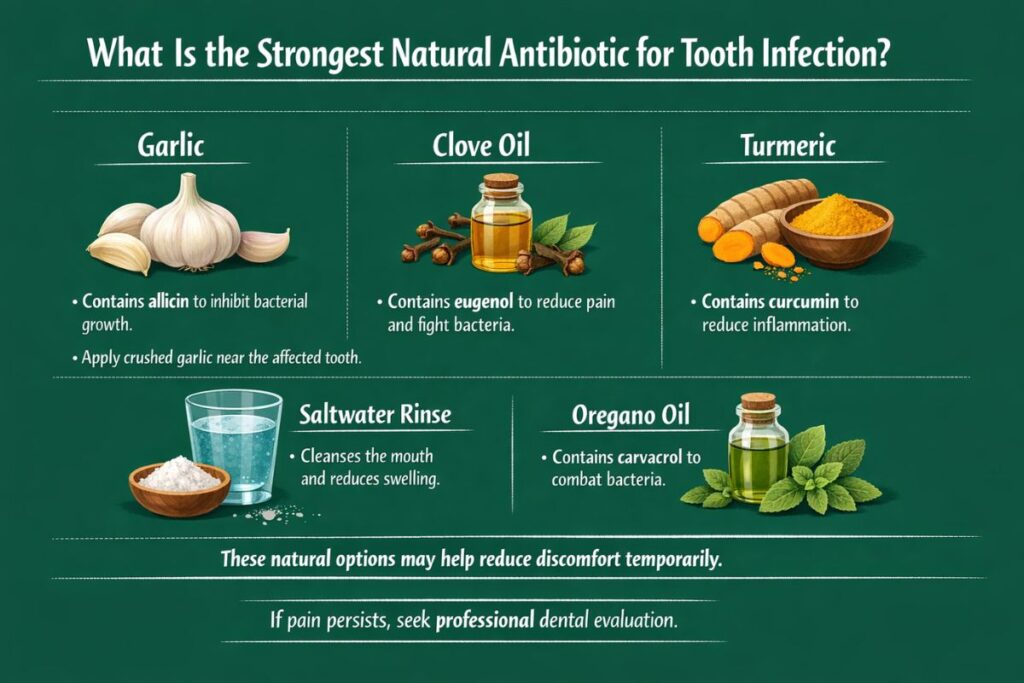
Several natural substances are known for their antibacterial properties. While none of them can replace professional treatment, they may help support oral health and reduce temporary discomfort.
Garlic
Garlic has long been recognized for its natural antibacterial properties. It contains a compound called allicin, which forms when garlic is crushed or chopped. Allicin has been studied for its ability to inhibit bacterial growth. Applying crushed garlic near the affected tooth may temporarily reduce bacterial activity and help ease discomfort.
Clove Oil
Clove oil is one of the most widely used natural remedies for dental discomfort. It contains eugenol, a compound with both antibacterial and mild numbing properties. Eugenol can help reduce inflammation and soothe irritated nerves, which is why clove oil has historically been used in traditional dental care practices.
Turmeric
Turmeric contains curcumin, a compound known for its anti-inflammatory properties. Curcumin may help reduce swelling around infected gums and promote a calmer oral environment. Some people mix turmeric with warm water to create a paste or rinse that supports oral hygiene.
Saltwater Rinse
A simple saltwater rinse can create a cleansing environment in the mouth. Salt helps draw fluid away from swollen tissues and may reduce bacterial buildup. Rinsing with warm saltwater can also help flush debris and bacteria from the affected area.
Oregano Oil
Oregano oil contains carvacrol, a natural antimicrobial compound that may help slow bacterial growth. Some people dilute oregano oil before applying it to the gums. Because essential oils are very strong, they should always be used carefully and in diluted form.
These natural options may help reduce discomfort temporarily. However, if pain persists, seeking professional dental evaluation remains the most reliable solution.
How to Use Natural Remedies Safely for Tooth Pain
Natural remedies should always be used cautiously. Many essential oils and herbal extracts are highly concentrated and may irritate oral tissues if used incorrectly. Understanding proper usage helps reduce the risk of complications.
When using natural remedies for tooth discomfort, consider the following precautions:
- Dilute essential oils before applying them to gums
- Avoid swallowing concentrated oils or herbal extracts
- Use remedies only for short-term symptom relief
- Maintain good oral hygiene through brushing and flossing
- Monitor symptoms and seek care if pain worsens
Natural substances should never be used as a replacement for dental treatment. If pain continues or swelling develops, it is important to schedule an evaluation with a qualified dental professional.
Signs a Tooth Infection Needs Immediate Dental Care
Although natural remedies may provide temporary relief, certain symptoms indicate that the infection requires urgent professional attention.
Warning signs include:
- Fever or chills
- Visible facial swelling
- Difficulty swallowing or breathing
- Persistent severe tooth pain
- Pus around the affected tooth or gums
These symptoms may indicate that the infection is spreading beyond the tooth. In rare cases, untreated infections can travel into the jawbone or bloodstream, which can create serious health risks.
If these signs appear, immediate dental evaluation is essential. Early treatment from a professional emergency dentist in Cheney prevents complications and helps restore oral health quickly.
How Dentists Treat Tooth Infections
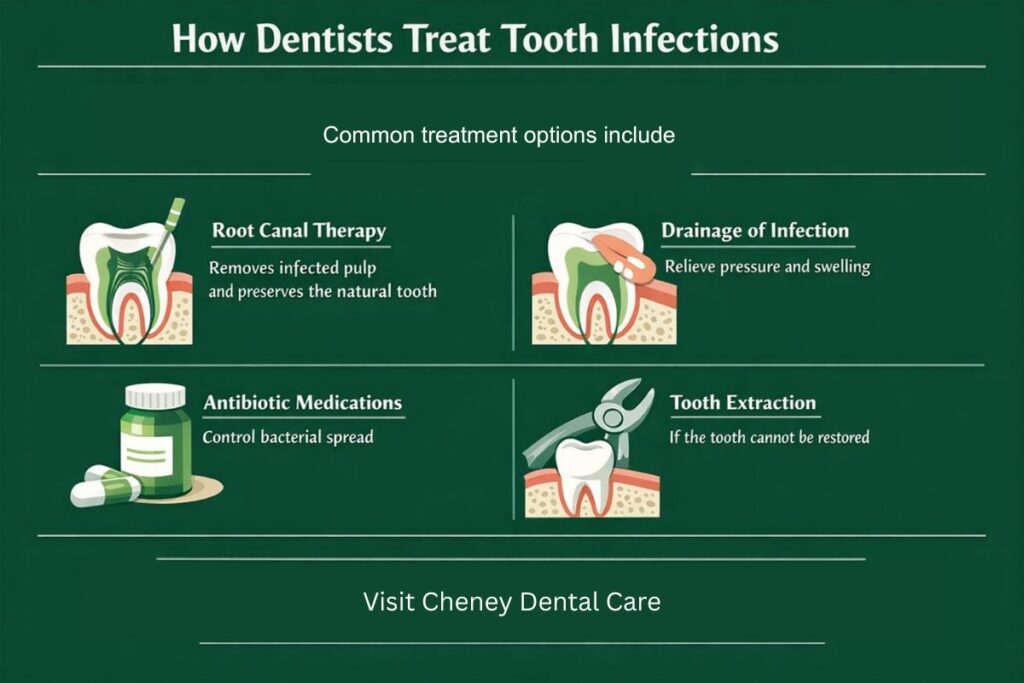
Professional dental treatment focuses on removing the source of infection rather than simply easing symptoms. When patients visit Cheney Dental Care, the dental team evaluates the affected tooth and recommends treatment based on the severity of infection.
Common treatment options include:
- Root canal therapy, which removes infected pulp and preserves the natural tooth
- Drainage of infection to relieve pressure and swelling
- Antibiotic medications to control bacterial spread
- Tooth extraction if the tooth cannot be restored
These procedures eliminate infected tissue and stop bacteria from continuing to damage surrounding structures. Treating the infection at its source provides long-term relief and protects overall oral health.
How to Prevent Tooth Infections Naturally
Preventing tooth infections begins with consistent oral hygiene and healthy lifestyle habits. Good daily care helps keep harmful bacteria under control and reduces the risk of tooth decay or gum disease.
Helpful prevention strategies include:
- Brush teeth twice daily using fluoride toothpaste
- Floss regularly to remove plaque between teeth
- Limit sugary snacks and drinks
- Drink water throughout the day to rinse away bacteria
- Schedule routine dental checkups
Many Cheney residents enjoy outdoor activities at Turnbull National Wildlife Refuge or local community events. Maintaining good oral health ensures that dental pain does not interfere with these everyday moments.
Tooth infections can cause intense discomfort and should never be ignored. While natural remedies such as garlic, clove oil, turmeric, and saltwater rinses may provide temporary relief, they cannot remove the infection inside a tooth. Professional dental care remains the safest way to treat the underlying problem and protect your oral health.
If you are experiencing persistent tooth pain, swelling, or signs of infection, early evaluation is essential. The team at Cheney Dental Care is committed to helping local families maintain healthy smiles through accurate diagnosis and timely treatment. Scheduling a visit at the first sign of trouble allows you to address the problem before it becomes more serious and return to enjoying daily life in Cheney with comfort and confidence.
What People Ask
1. Is garlic effective for tooth infections?
Garlic contains allicin, a natural antibacterial compound. It may help slow bacterial activity near the affected area, but it cannot treat deep infections within the tooth.
2. How long can a tooth infection last without treatment?
A tooth infection will not resolve on its own. Without treatment, the infection may worsen and potentially spread to nearby tissues or bone.
3. Can saltwater rinses help with tooth infections?
Warm saltwater rinses help cleanse the mouth and may reduce bacteria around the gums. They can also ease swelling, but they do not treat the underlying infection.
4. How do I know if a tooth infection is serious?
Signs of a serious infection include facial swelling, fever, severe pain, and difficulty swallowing. These symptoms require immediate dental evaluation.
5. Are essential oils safe for tooth infection relief?
Some essential oils have antibacterial properties, but they must always be diluted before use. Improper use may irritate gums or oral tissues.